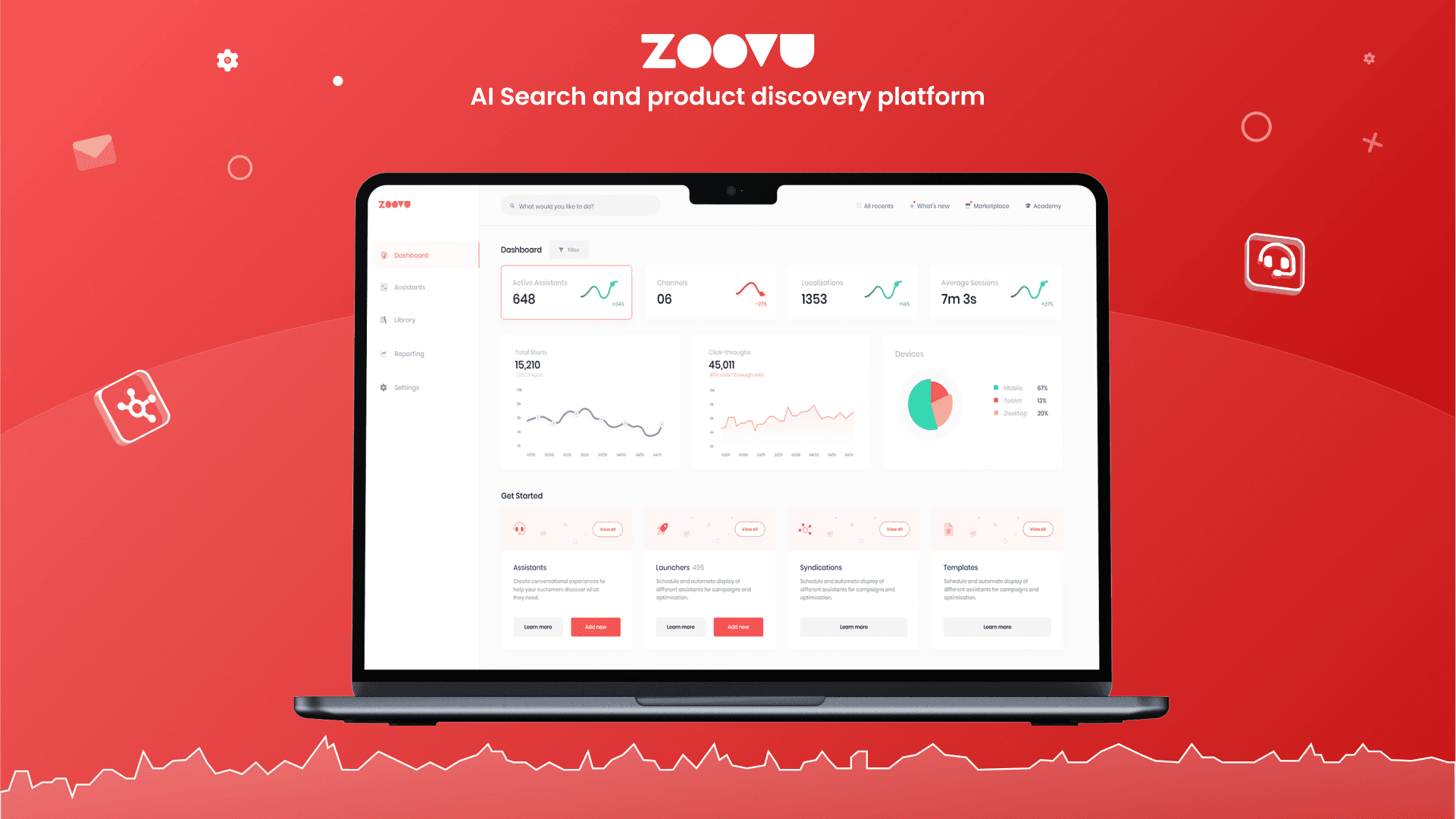
Zoovu is a recognized leader in AI-powered search and product discovery, widely valued for its capability to simplify complex search processes for users. This project involved a complete UX/UI revamp aimed at refining user experience, enhancing functionality across interconnected modules, and ensuring Zoovu remains competitive in delivering top-notch, user-centered experiences. Our objectives centered on applying user insights to optimize the design and usability of each module while improving cross-module interactions for a cohesive, streamlined journey.
Our research phase began with in-depth analysis of user insights provided by stakeholders. These insights, presented in comprehensive documents, outlined user frustrations, usability barriers, and expectations for improvements. The analysis informed our understanding of each module's impact on the overall user experience, allowing us to create user personas, journey maps, and pain point lists tailored to Zoovu's diverse user base. Our goal was to ground our redesign efforts in real user challenges, keeping each module’s specific function and impact on the user journey at the forefront. By identifying critical usability issues and friction points, we could build a solid foundation for the revamp.
Collaborative Efforts and User Testing
Our collaborative meetings ensured consistent progress and alignment across disciplines, including development, product management, and marketing. By sharing module designs and discussing technical feasibility, we were able to refine our designs in real time. Regular check-ins allowed for efficient problem-solving and ensured the integration of each module met both technical and business objectives. After finalizing designs, we conducted user testing with Maze to validate our assumptions. Testing with Maze provided valuable quantitative data, allowing us to assess usability metrics like task completion rates, engagement levels, and overall user satisfaction. This stage revealed any remaining pain points, which we addressed to create a more polished and effective design.ence.
Challenges and Solutions
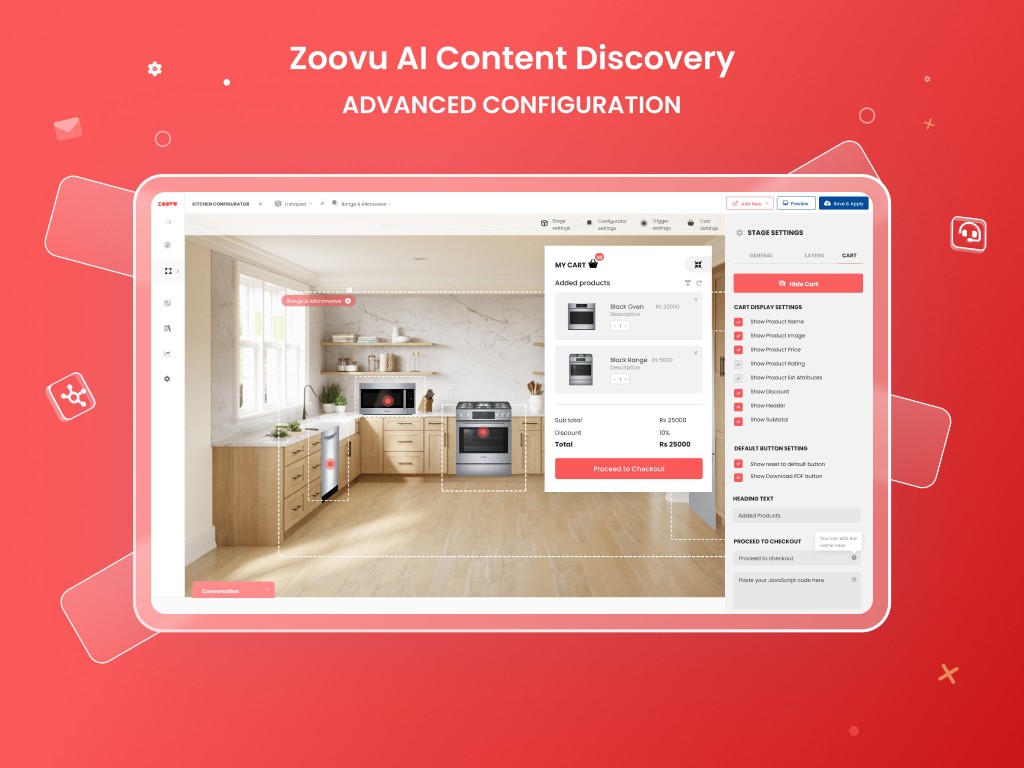
One of our primary challenges was managing the complexity of interlinked modules, each with unique functions and user expectations. To address this, we adopted a modular approach, designing each part independently while focusing on seamless cross-module interactions. Balancing the expectations of stakeholders with the needs of users was another challenge, requiring us to blend stakeholder insights with user-centered design adjustments. Rapid iteration needs in design sprints also posed difficulties, but focusing on wireframes and prioritizing team feedback helped us create quality designs within tight timelines.